
A chair can look comfortable and still be clinically unsuitable. For someone living with reduced mobility, neurological impairment, muscle weakness, pain or postural asymmetry, seating has a direct impact on function, breathing, pressure management, comfort and quality of life. Specialist seating is therefore not about choosing the softest chair or the most padding. It is about creating the right relationship between the person, the chair and the activities they need or want to complete.
Common signs that seating may need reviewing
A seating assessment may be required when a person:
Frequently slides forward.
Leans heavily to one side.
Requires pillows to remain upright.
Develops redness or pressure damage.
Experiences increasing pain when sitting.
Cannot use their arms effectively from the chair.
Becomes fatigued shortly after sitting out.
Has difficulty maintaining their head position.
Needs repeated repositioning by carers.
Has had a recent change in weight, muscle tone, mobility or medical condition.
These issues should not automatically be blamed on the person’s diagnosis.
The chair itself may be too wide, too deep, too low or provide inadequate pelvic, trunk, leg or head support.
Posture affects function
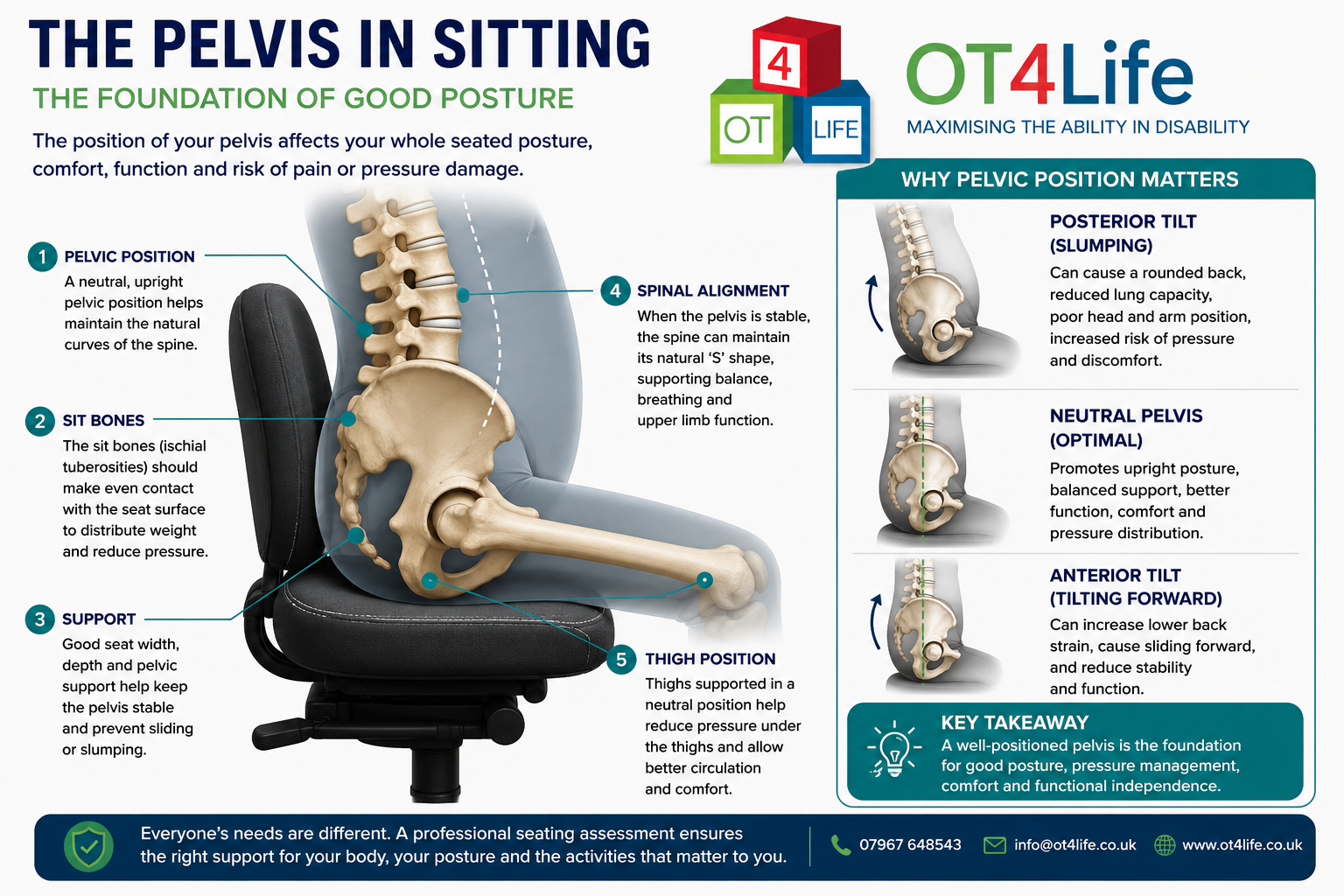
In clinical practice, the pelvis is seen as the foundation of seated posture. When the pelvis is poorly positioned, the trunk, shoulders, head and limbs often compensate. This may contribute to leaning, sliding, reduced arm movement and difficulty completing everyday activities.
For example, a person who appears to have reduced upper limb ability may actually be struggling because the chair does not provide sufficient trunk stability. Once the pelvis and trunk are better supported, the person may have improved access to eating, communication, computer use or creative activities. Seating should therefore be assessed around function, not appearance alone.
Pressure management requires more than a cushion
Pressure care is often reduced to the question: “What cushion are they using?”
That is far too simplistic.
Pressure risk is influenced by skin condition, nutrition, continence, sensation, movement, sitting duration, posture, weight distribution and the person’s ability to reposition.
A high specification cushion cannot compensate for a chair that is the wrong size or a person who remains in one position for excessive periods.
Tilt in space may help redistribute pressure and manage fatigue, but it must be used correctly. Carers need to understand when and why the chair should be tilted, how the person should be repositioned and what changes to monitor.

One chair may not meet every need
People often spend significant periods moving between a bed, wheelchair and care chair. Each surface has a different purpose. A wheelchair may support mobility and access. A care chair may support rest, comfort and pressure management. A profiling bed may support sleep, personal care and repositioning.
Expecting one item of equipment to meet every clinical and functional requirement can lead to compromise.
OT4Life completes specialist seating and postural assessments in homes, care settings and community environments. We work with individuals, families, care teams, suppliers and case managers to identify seating that supports safety, comfort and meaningful activity.
Because specialist seating is not just about sitting.
It is about what the person can do once they are properly supported.